
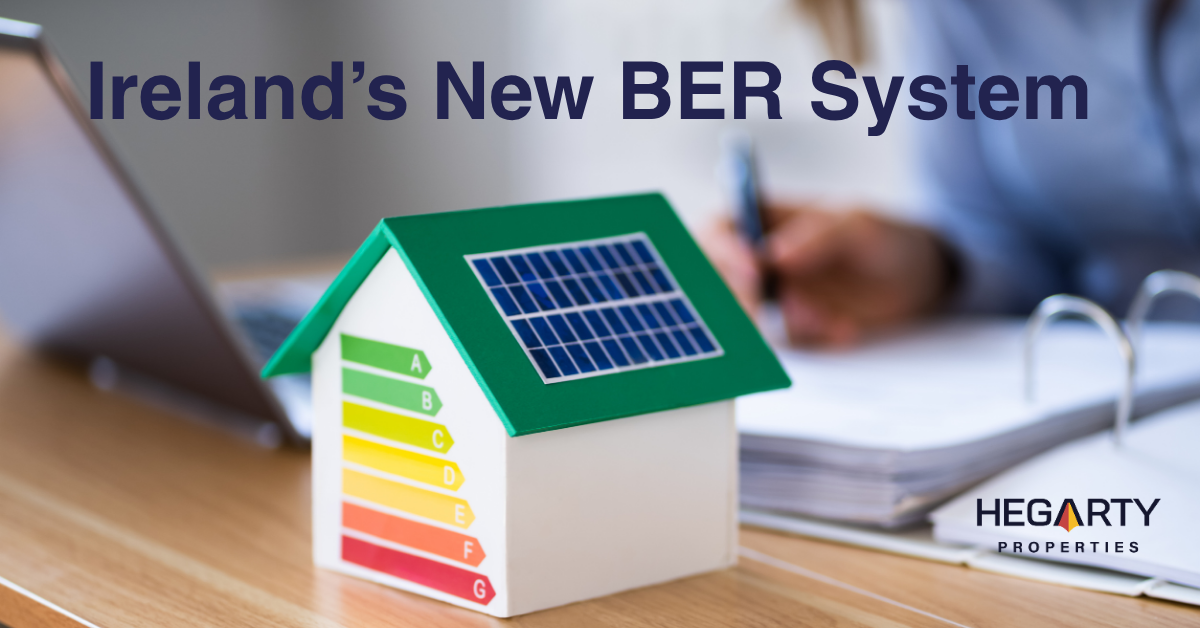
Ireland’s New BER System 2026
Ireland’s property market is about to experience one of the biggest changes to home energy ratings in years. From 24 May 2026, the current Building Energy Rating (BER) system will officially move to a simplified format under new EU regulations.
For homeowners, buyers, landlords and retrofit professionals, this is more than a cosmetic update. It signals a broader shift towards clearer energy transparency, lower-carbon housing, and a more standardised European system for measuring building performance.
The change is being introduced under the revised EU Energy Performance of Buildings Directive (EPBD), which aims to improve how energy performance is communicated across Europe.
What Exactly Is Changing?
Ireland currently uses a detailed 15-point BER scale, including ratings such as A1, A2, B1, B2 and so on.
From May 2026, that structure will be replaced with a simpler system:
- A0
- A
- B
- C
- D
- E
- F
- G
The subcategories, such as B1, B2 and B3, will disappear entirely.
The goal is to make energy ratings easier for consumers to understand and easier to compare across EU countries.
According to the Irish Government and the Sustainable Energy Authority of Ireland (SEAI), the new format is intended to improve clarity while aligning Ireland with broader European climate and housing targets.
Meet the New “A0” Rating
One of the most talked-about additions is the new A0 category.
This rating will apply to homes with extremely high energy performance that do not rely on fossil fuels. In practice, this is likely to include highly efficient homes using technologies such as:
- Heat pumps
- Solar PV systems
- Advanced insulation
- Low-carbon or zero-emission heating systems
The A0 classification is designed to recognise next-generation homes and future-proof housing standards as Ireland moves towards decarbonisation goals.
Will Existing BER Certificates Still Be Valid?
Yes.
If your property already has a BER certificate, it will remain valid for 10 years from the issue date unless major renovation works are completed. Existing BERs will still satisfy legal requirements for selling or renting a property.
That means homeowners do not need to rush into getting a new BER assessment simply because the scale is changing.
The New BER Certificate Will Include More Information
The update is not just about changing letters on a scale. The redesigned BER certificate will contain significantly more detail about a building’s environmental impact.
According to SEAI and the Department of Housing, the updated certificates are expected to include:
- Greenhouse gas emissions data
- Renewable energy contribution
- Lifecycle carbon information (Global Warming Potential)
- Tailored upgrade recommendations
- QR codes linking homeowners to retrofit guidance and support information
This reflects a growing focus on both operational energy use and the long-term carbon footprint of buildings.
Why This Matters for the Irish Property Market
Energy efficiency is already influencing:
- Mortgage approvals
- Home values
- Insurance considerations
- Rental demand
- Retrofit decisions
As utility costs remain a major concern, BER ratings have become a shorthand indicator for future running costs and comfort levels.
The simplified system may make it easier for buyers to understand how efficient a property really is, particularly when comparing homes internationally or assessing retrofit potential.
At the same time, the changes support Ireland’s wider retrofit ambitions. The Government has repeatedly stated that improving building efficiency is central to meeting climate targets and reducing energy demand nationwide.
What Homeowners Need to Know and Should Do Now
For most homeowners, no immediate action is required. However, this is a good opportunity to:
- Review your current BER
- Consider retrofit opportunities
- Explore available SEAI grants
- Understand how your home may perform under future standards
SEAI continues to expand retrofit supports and home energy upgrade schemes, including grants for insulation, windows, doors and heat pump upgrades.
The Bigger Picture
The BER overhaul is part of a much larger European transition towards lower-emission buildings and cleaner housing infrastructure.
Buildings account for roughly 40% of energy consumption across the EU, making residential energy efficiency a major policy priority.
For Ireland, the new BER system is not just a redesign, it is a signal of where the housing market is heading:
- Smarter homes
- Cleaner energy
- Greater transparency for homeowners and buyers alike
For more information, visit: